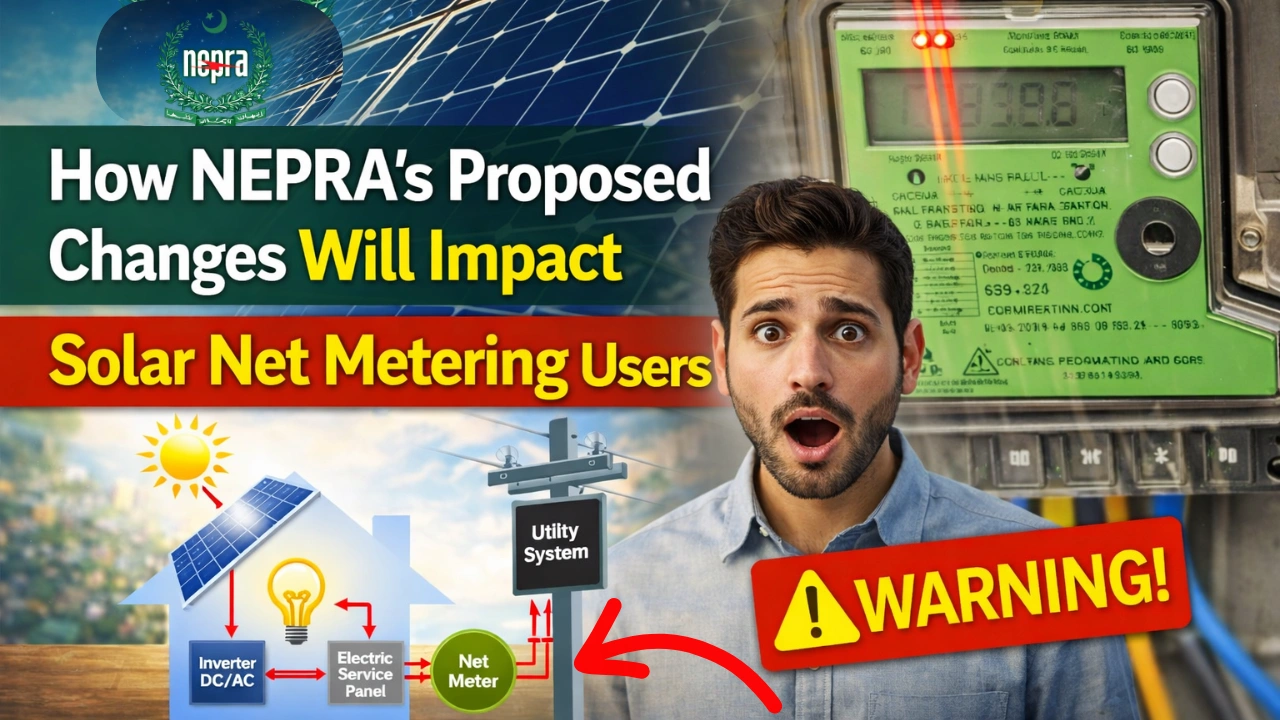
How NEPRA’s Proposed Changes Will Impact Solar Net Metering Users
Pakistan’s rooftop solar landscape is heading toward a major regulatory shift as the National Electric Power Regulatory Authority (NEPRA) moves to overhaul the existing solar net metering framework. The regulator has proposed introducing gross metering for new solar consumers, aiming to reduce financial pressure on conventional electricity users and distribution companies.
The proposal is part of NEPRA’s newly released Prosumer Regulations (NPR) draft, which outlines how future solar users will sell electricity to the grid under a different pricing and billing structure.
What Is Changing in Solar Net Metering?
Under the current solar net metering system, consumers offset the electricity they export to the grid against what they import, significantly lowering monthly power bills. However, NEPRA believes this model has created cost imbalances for non-solar users connected to the grid.
For new rooftop solar installations, NEPRA plans to replace net metering with gross metering, meaning:
-
All exported solar electricity will be sold at a fixed government-set tariff
-
Electricity consumed from the grid will be billed separately at retail rates
-
Monthly bill adjustments through unit offsets will no longer apply



Relief for Existing Solar Net Metering Consumers
Current solar users don’t need to worry—at least for now.
NEPRA has confirmed that existing net metering consumers with valid seven-year contracts will continue to receive the current buyback rate of Rs. 22 per unit until their agreements expire. This grandfathering policy is designed to protect earlier investors who installed solar systems under previous rules.
New Tariff Structure Under Gross Metering
For new solar users, NEPRA has proposed a feed-in tariff of Rs. 11.30 per unit for electricity exported to the grid. Key highlights include:
-
Five-year contracts, extendable by mutual consent
-
Payments based on total exported units, not bill adjustments
-
Public feedback invited within 30 days before final approval
NEPRA may also conduct a public hearing to gather stakeholder input before finalizing the regulations.
Why NEPRA Wants to End Solar Net Metering for New Users
According to official estimates, the existing solar net metering regime is placing a burden of up to Rs. 2 per unit on non-solar grid consumers. Rapid rooftop solar growth has reduced electricity sales from the national grid, leading to revenue shortfalls for power distribution companies.
Key figures cited by authorities include:
-
3.2 billion units decline in grid sales during FY2024
-
Rs. 101 billion revenue loss for DISCOs
-
Rs. 0.9 per unit average tariff increase for other consumers
Looking ahead, projections suggest that by FY2034, lost grid sales could reach 18.8 billion units, potentially pushing tariffs Rs. 5–6 per unit higher for regular consumers.
The Bigger Issue: Grid Usage and Buyback Rates
Energy officials argue that the national grid is effectively acting as a free battery for solar users—absorbing surplus power during the day and supplying electricity at night—without adequate recovery of system costs.
They also point out that utility-scale solar projects are now being contracted at below Rs. 10 per unit, making the existing Rs. 22 per unit solar net metering buyback rate financially unsustainable. The proposed Rs. 11.30 per unit gross metering tariff is intended to narrow this gap and stabilize future electricity prices.
What Happens Next?
NEPRA will review stakeholder feedback and may revise the proposal before implementation. Until then, solar net metering remains unchanged for existing consumers, while new applicants should closely monitor regulatory developments before investing in rooftop solar systems.
This policy shift could reshape Pakistan’s solar market—balancing renewable growth with long-term grid sustainability.